The New Copper Corridor: How Trump's Mineral Security Doctrine Is Reshaping Central Asia
Whilst analysts obsess over lithium in Latin America and rare earths in Africa, the most consequential shift in critical mineral geopolitics is unfolding across Central Asia's steppes. As the Trump administration prosecutes what it terms “economic security” with the vigour previous administrations reserved for military threats, Kazakhstan has emerged as an unexpectedly pivotal player in the West's strategy to break Chinese dominance over critical minerals.
This is not speculative positioning. It is being driven by explicit diplomatic engagement, structural commodity deficits, and a deliberate recalibration of how Washington views frontier market partnerships in an era of great power competition.
Trump's Mineral Security Doctrine
President Trump's return to the White House has crystallised a strategic imperative: control over critical minerals now equals national security. China's refining dominance across strategic minerals, averaging approximately 70% market share for 19 out of 20 critical minerals according to the International Energy Agency, constitutes what National Security Adviser Mike Waltz terms "an unacceptable vulnerability in the new era of great power competition".
Copper sits at the centre of this equation. No longer treated as a cyclical industrial metal, it is now recognised as the anchor commodity for electrification, grid expansion, defence infrastructure, and energy transition strategies. Demand growth is structural, supply pipelines are proving stubbornly slow, and the West has become explicit about reducing dependence on Chinese processing.
The objective is no longer simply to secure more supply, but to secure supply that is politically aligned, transparent, and resilient.
Kazakhstan's Strategic Elevation
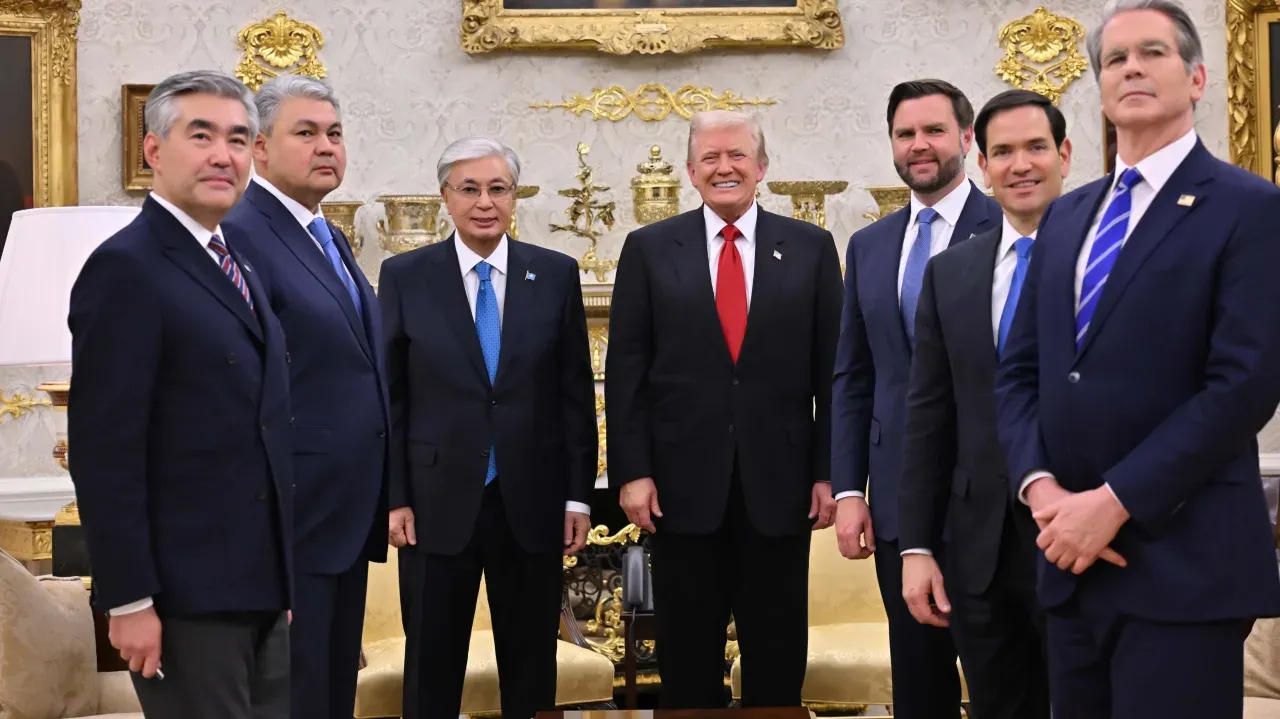
President Kassym-Jomart Tokayev's November 2025 White House meeting with Trump marked a watershed. During the C5+1 summit, Kazakhstan announced its decision to join the Abraham Accords alongside signing $17 billion in commercial agreements. Discussions focused explicitly on critical mineral development, logistics corridor expansion, and investment facilitation; genuine strategic partnership vocabulary.
The relationship deepened substantially in December 2025 when Trump invited Tokayev to attend the 2026 G20 summit in Miami as a guest, an extraordinary recognition for a non-member state. Following their 23 December telephone conversation, Trump posted on Truth Social: "We discussed the importance of bringing peace to ongoing conflicts, and increased trade and cooperation between our nations. The relationship with both countries is spectacular".
As political analyst Rafael Sattarov explained, "Competition with China is a key driver of Washington's move. The U.S. does not want Central Asia to become overly dependent on Beijing, particularly in areas such as rare earth metals, uranium, lithium and other critical resources". The G20 invitation places Tokayev physically at the table with G20 heads of state, providing access and recognition that facilitates commercial cooperation.
Julie M. Stufft, confirmed as U.S. Ambassador to Kazakhstan in October 2025, underscored this momentum when presenting her credentials to President Tokayev on 9 January 2026: "Kazakhstan-U.S. partnership is as strong as it has ever been. President Tokayev and President Trump have a very close relationship, and they will see each other again soon".
Why Kazakhstan Fits the Requirement
Kazakhstan occupies a unique position. It is resource-rich, geographically central, and historically underweighted in global portfolios. Yet over the past two decades it has systematically accumulated characteristics that matter to Western governments seeking reliable partners: investment-grade sovereign ratings (BBB- from S&P with positive outlook, BBB from Fitch), a track record of foreign direct investment totalling $439.7 billion since 2005, and a steadily maturing legal and regulatory environment.
This transformation has been incremental rather than theatrical. Commercial law reform, court specialisation, and capital market development have been pursued in parallel with infrastructure investment. The result is a country that increasingly sits in a category of its own: no longer a post-Soviet commodity exporter, but not yet fully priced as an emerging-market industrial hub.
For Western governments seeking to reduce exposure to single country supply chains, Kazakhstan offers something rare: scale without antagonism, and access without strategic ambiguity.
The Middle Corridor as Geopolitical Infrastructure
Equally decisive is geography. Kazakhstan sits astride the so called Middle Corridor, linking East Asia to Europe via the Caspian and the Caucasus whilst bypassing Russian transit routes. As sanctions, security concerns, and insurance constraints reshape global logistics, this corridor has shifted from regional infrastructure project to strategic alternative.
Mining, logistics, and infrastructure in Kazakhstan are no longer separable. They are part of the same strategic equation. Companies positioned within this corridor are not simply mining contractors; they are operational nodes in a supply chain that Washington now views through a security lens.
The Copper Catalyst
Copper is what makes this equation investable. Forecasts consistently point to a widening structural deficit over the coming decade as electrification accelerates and legacy mines struggle with declining grades and permitting constraints. Goldman Sachs projects copper prices reaching $15,000 per tonne by 2035, driven by infrastructure requirements that current mining capacity cannot satisfy.
Kazakhstan, the world's 9th-largest copper producer with output of 740,000 metric tonnes in 2024, is opening three new major copper deposits. What differentiates the current cycle is not simply volume growth, but the manner in which that growth is being executed. The emphasis is shifting from output at any cost to projects that can withstand institutional scrutiny on governance, environmental standards, and financing structure.
This is where bankability becomes decisive. Access to capital is now governed less by geology than by credibility.
From Frontier Operator to Institutional Counterparty
A defining feature of the new Central Asian resource landscape is the emergence of local groups deliberately engineering themselves to meet Western institutional standards. Rather than relying on sovereign backing or opaque bilateral financing, these groups are positioning themselves as counterparties that global investors can underwrite without political discounting.
This includes comprehensive financial audits, ESG compliance frameworks, engagement with international rating agencies, and participation in capital market development initiatives. Transparency is not an afterthought; it is a strategic asset that determines whether projects can move from resource to reserve.
For companies operating in this space, the convergence of US strategic prioritisation, commodity fundamentals, and institutional credibility creates a narrow window. Capital markets are beginning to recognise the quality embedded in parts of the region, but valuations have not yet caught up to the geopolitical reality.
An Underpriced Inflection Point
Despite these shifts, market perception lags reality. Central Asia remains under-allocated in most global portfolios, often grouped loosely with higher-risk frontier jurisdictions that bear little resemblance to Kazakhstan's current profile. This creates a familiar pattern: strategic importance rising faster than valuation.
History suggests that such gaps do not persist indefinitely. When supply constraints become acute and alternative corridors are no longer theoretical, capital follows policy alignment. The November White House summit, the December G20 invitation, and Ambassador Stufft's recent remarks signal that this corridor is no longer a regional project; it is a strategic imperative.
Looking Ahead
The significance of the new copper corridor running through Central Asia reflects a broader reordering of how critical minerals are sourced, financed, and governed. For Kazakhstan, it represents a transition from being resource rich to being strategically indispensable. For investors, the question is not whether this corridor matters, that has been answered by Washington's actions.
The more relevant question is whether the market will recognise the institutional quality now embedded in parts of the region before scarcity forces repricing. In critical minerals, timing is rarely forgiving. The corridor is taking shape. The adjustment in perception will follow.